NYSE Chief Steps Down
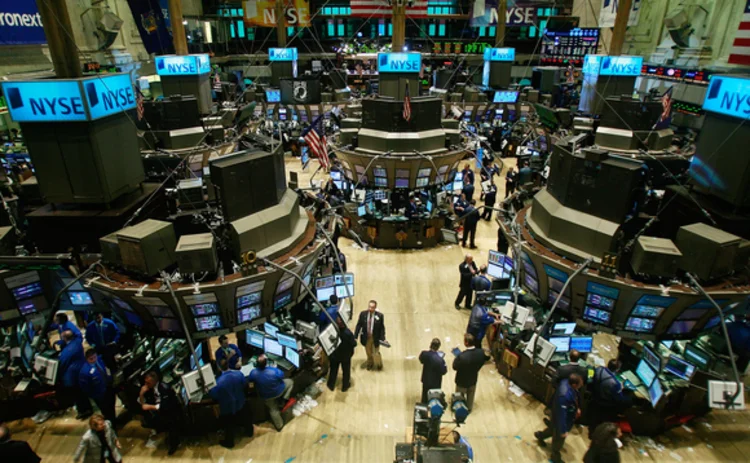
Niederauer will leave three months ahead of his scheduled departure date. He has been replaced with immediate effect as the head of NYSE by Thomas Farley, currently COO, who takes on the role of CEO and president. Niederauer will remain as co-president of ICE, which announced plans to acquire NYSE Euronext at the tail end of 2012, until August.
Having been at the head of the world's largest exchange since 2007, when it merged with Euronext, Niederaruer spent a large part of his career at Goldman Sachs, and was at the forefront of its decision to purchase Spears, Leeds and Kellogg (SLK) in 2000. Goldman finalized the sale of its designated market maker unit on the NYSE floor, inherited from SLK, to high-speed trading firm IMC Financial Markets this week, following other major investment banks in leaving the exchange floor.
While ICE is retaining NYSE as an integral part of its business, as well as its London-based derivatives venue Liffe, it is mulling avenues to spin off the Euronext component, which comprises a number of European exchanges.
Only users who have a paid subscription or are part of a corporate subscription are able to print or copy content.
To access these options, along with all other subscription benefits, please contact info@waterstechnology.com or view our subscription options here: https://subscriptions.waterstechnology.com/subscribe
You are currently unable to print this content. Please contact info@waterstechnology.com to find out more.
You are currently unable to copy this content. Please contact info@waterstechnology.com to find out more.
Copyright Infopro Digital Limited. All rights reserved.
As outlined in our terms and conditions, https://www.infopro-digital.com/terms-and-conditions/subscriptions/ (point 2.4), printing is limited to a single copy.
If you would like to purchase additional rights please email info@waterstechnology.com
Copyright Infopro Digital Limited. All rights reserved.
You may share this content using our article tools. As outlined in our terms and conditions, https://www.infopro-digital.com/terms-and-conditions/subscriptions/ (clause 2.4), an Authorised User may only make one copy of the materials for their own personal use. You must also comply with the restrictions in clause 2.5.
If you would like to purchase additional rights please email info@waterstechnology.com
More on Emerging Technologies
Can AI beat exceptions out of the back office?
The Waters Wrap: Agentic AI can help operations teams tackle exceptions. But first, they need to get their house in order, writes Wei-Shen.

Banks brace for higher costs as chip memory runs short
A recent report from Gartner shows the price of memory is rising, putting the squeeze on firms eager to adopt AI.
Manuela Veloso on how banks can make their AI dreams reality
Former JP Morgan head of AI research says open-ended enquiry will unlock technology’s full potential.

Photonics: time for trading tech to see the light
The Waters Wrap: While the sector is dominated by Big Tech, photonic-based solutions could one day help trading firms take more control over their AI ambitions, Anthony says.

Banks should not count humans out in adoption of agentic AI
It will take time to strike a balance between humans and AI agents, and it may start in post-trade, Diederik Geeraerts writes.

Fully electronic IPOs, Google Gemini for finance, and more
The Waters Cooler: A recap of the major tech and data news from the past week in the capital markets.

Waters Wavelength Ep. 357: Off topic, on record
This week, Tony, Reb, and Shen talk about non-tech things.

Citi reveals Custody+, AI API security scare, 23/5 trading in Canada, and more
The Waters Cooler: A recap of the major tech and data news from the past week in the capital markets.