
Barclays, Credit Suisse Acquiesce to SEC Dark Pool Settlements
Barclays and Credit Suisse agree to pay $70 million and $84.3 million, respectively, to settle cases of misrepresentation of dark pool operations.
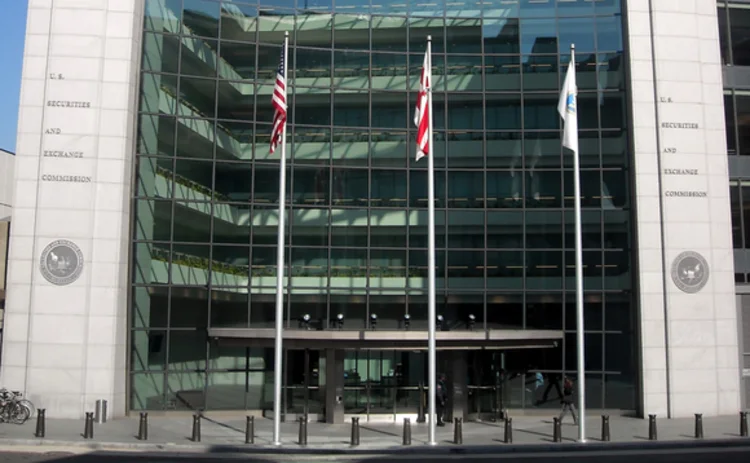

Both Barclays and Credit Suisse were charged with misleading investors over how the banks' respective dark pool trading venues operated. Barclays has agreed to pay $35 million to both the SEC and the New York Attorney General (NYAG), while Credit Suisse will pay $30 million to the SEC, $30 million to the NYAG, and $24.3 million in disgorgement and prejudgment interest to the SEC for a total of $84.3 million.
The SEC's charge against Barclays was focused on the bank's failure to police its dark pool through a feature called "Liquidity Profiling", which was meant to police order flow in its LX dark pool, while the bank ran weekly surveillance for toxic order flow. The SEC found that Barclays neither ran surveillance or used the Liquidity Profiling tool, and also has over-ridden the feature by moving some subscribers from the most aggressive categories to the least aggressive, without informing investors.
"Barclays misrepresented its efforts to police its dark pool, overrode its surveillance tool, and misled its subscribers about data feeds at the very time that data feeds were an intense topic of interest," said Robert Cohen, co-chief of the SEC's Market Abuse Unit.
Credit Suisse, meanwhile, was charged with misrepresenting that its Crossfinder dark pool utilized a feature called Alpha Scoring to characterize subscriber order flow monthly in an objective and transparent manner.
In its charge, the SEC said that Alpha Scoring included "significant subjective elements, was not transparent, and did not categorize all subscribers on a monthly basis" and that Credit Suisse "misrepresented that it would use Alpha Scoring to identify 'opportunistic' traders and kick them out of its electronic communications network, Light Pool. In fact, Alpha scoring was not used for the first year that Light Pool was operational."
In December last year, three of JPMorgan's Hong Kong-based equities businesses were fined a collective $30 million by the Securities and Futures Commission (SFC) for failing to properly implement its dark pool trading venue.
Only users who have a paid subscription or are part of a corporate subscription are able to print or copy content.
To access these options, along with all other subscription benefits, please contact info@waterstechnology.com or view our subscription options here: https://subscriptions.waterstechnology.com/subscribe
You are currently unable to print this content. Please contact info@waterstechnology.com to find out more.
You are currently unable to copy this content. Please contact info@waterstechnology.com to find out more.
Copyright Infopro Digital Limited. All rights reserved.
As outlined in our terms and conditions, https://www.infopro-digital.com/terms-and-conditions/subscriptions/ (point 2.4), printing is limited to a single copy.
If you would like to purchase additional rights please email info@waterstechnology.com
Copyright Infopro Digital Limited. All rights reserved.
You may share this content using our article tools. As outlined in our terms and conditions, https://www.infopro-digital.com/terms-and-conditions/subscriptions/ (clause 2.4), an Authorised User may only make one copy of the materials for their own personal use. You must also comply with the restrictions in clause 2.5.
If you would like to purchase additional rights please email info@waterstechnology.com
More on Regulation
SEC gunning to take over CAT in 2027
Chairman Atkins has plans for the SEC to run the Consolidated Audit Trail directly. Industry participants are split on the idea.

Managing regulatory transformation through a Dual-Flow Operating Model
Darshan Shah presents an operating model that enables project teams to implement complex regulatory programs, preserve business continuity, reduce risk, and prepare enterprise platforms for regulatory change.

The complexity of using AI to tackle compliance
The Waters Wrap: Law firms are introducing new tools to help with regulatory compliance, potentially encroaching on regtech vendors’ territory, Wei-Shen writes.

SEC denies 24X’s requested SIP exemption, for now
Start-up exchange cannot begin its overnight market session before the equity data plans’ hours are scheduled to be extended on December 6. But that’s only half of it.
Cyber audit leaves Eiopa with a credibility problem
The Dora supervisor charged with overseeing critical tech vendors has been critiqued for IT security failings.

The danger of prediction markets is precisely how useful they are
The Waters Wrap: Prediction markets may seem like a gamer’s paradise or a honey pot for those looking to corrupt betting. But they have another use in forming institutional prices. At least, that’s what Max Bowie is putting his money on.

The Clarity Act enters the Last Chance Saloon
The US’ landmark crypto bill’s future looks uncertain. Crypto fans may still see the bill pass before fall, but it’s the hope that kills you, Eliot writes.

Red alert: how Nasdaq’s Smarts became surveillance blind spot
Software that looks for shifty trades has been asleep on the job, affecting alerts for hundreds of products.
