Gensler Rebuffs Regulatory Reach Critics in FIA Keynote
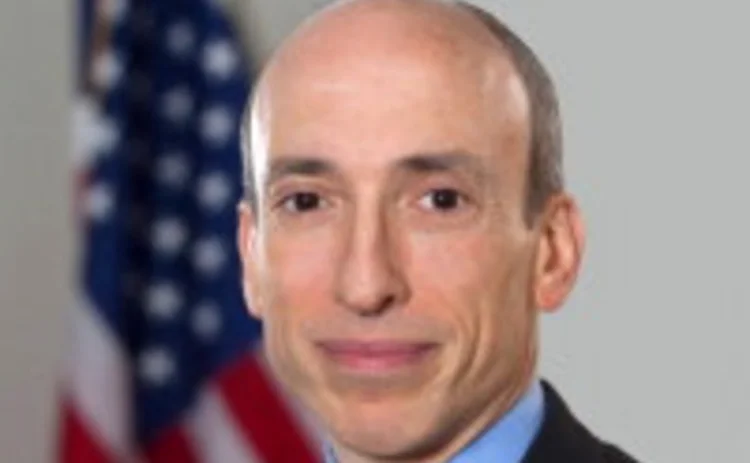
During the course of his speech, Gensler highlighted the achievements of US regulatory agencies in finalizing and enacting Dodd-Frank reforms over swaps trading, saying that ideas were now becoming a reality. In addressing the need for offshore affiliates of US financial institutions, and foreign institutions operating in the US to comply with Dodd-Frank mandates, he said that previous incidents involving the collapse of firms showed that contagion effects did not respect national boundaries.
"Looking forward, it's a priority that the Commission ensures the cross-border application of swaps market reform appropriately covers the risk of US affiliates operating offshore. During a default, risk knows no geographic border," he said. "If a run starts in one part of a modern financial institution, whether it's here or offshore, the risk comes back to our shores. That was true with AIG, which ran most of its swaps business out of the London neighborhood Mayfair. It was also true at Lehman Brothers, Citigroup, Bear Stearns and Long-Term Capital Management."
Various industry groups have criticized the perceived extra-territorial reach of Dodd-Frank Act requirements, saying that their operations could fall under the purview of US regulators even if their business in the US is minimal. Foreign regulators have also voiced criticism of the approach, and market participants have even said that in order to comply with some Dodd-Frank mandates, they will be forced to break the law in their own country.
Analogous Regimes
Gensler said that where appropriate, foreign competent authority regulation would be considered. However, the essence of the argument is that events with the potential to affect US markets should fall under US auspices.
"Thus, as the CFTC completes the cross-border guidance, I believe it's critical that Dodd-Frank swaps reform applies to transactions entered into by branches of US institutions offshore, between guaranteed affiliates offshore, and for hedge funds that are incorporated offshore but operate in the US," he continued. "Where there are comparable and comprehensive home country rules abroad, we can look to substituted compliance, but the transactions would still be covered."
Where there are comparable and comprehensive home country rules abroad, we can look to substituted compliance, but the transactions would still be covered.
He encouraged foreign firms that would seek to substitute US compliance with that of their home regulator to contact the CFTC immediately.
Only users who have a paid subscription or are part of a corporate subscription are able to print or copy content.
To access these options, along with all other subscription benefits, please contact info@waterstechnology.com or view our subscription options here: https://subscriptions.waterstechnology.com/subscribe
You are currently unable to print this content. Please contact info@waterstechnology.com to find out more.
You are currently unable to copy this content. Please contact info@waterstechnology.com to find out more.
Copyright Infopro Digital Limited. All rights reserved.
As outlined in our terms and conditions, https://www.infopro-digital.com/terms-and-conditions/subscriptions/ (point 2.4), printing is limited to a single copy.
If you would like to purchase additional rights please email info@waterstechnology.com
Copyright Infopro Digital Limited. All rights reserved.
You may share this content using our article tools. As outlined in our terms and conditions, https://www.infopro-digital.com/terms-and-conditions/subscriptions/ (clause 2.4), an Authorised User may only make one copy of the materials for their own personal use. You must also comply with the restrictions in clause 2.5.
If you would like to purchase additional rights please email info@waterstechnology.com
More on Regulation
Report once: will Esma’s €1bn reforms deliver the full picture?
Critics say plan to merge three reporting regimes will see scant returns, and won’t mesh with single-sided reporting.

Reasoning agents enter the onboarding process for banks
The next phase for banks in the KYC/AML space will be using agentic AI to replace sequential, siloed checks with orchestrator agents, IBM technologists say.

SEC gunning to take over CAT in 2027
Chairman Atkins has plans for the SEC to run the Consolidated Audit Trail directly. Industry participants are split on the idea.

Managing regulatory transformation through a Dual-Flow Operating Model
Darshan Shah presents an operating model that enables project teams to implement complex regulatory programs, preserve business continuity, reduce risk, and prepare enterprise platforms for regulatory change.

The complexity of using AI to tackle compliance
The Waters Wrap: Law firms are introducing new tools to help with regulatory compliance, potentially encroaching on regtech vendors’ territory, Wei-Shen writes.

SEC denies 24X’s requested SIP exemption, for now
Start-up exchange cannot begin its overnight market session before the equity data plans’ hours are scheduled to be extended on December 6. But that’s only half of it.
Cyber audit leaves Eiopa with a credibility problem
The Dora supervisor charged with overseeing critical tech vendors has been critiqued for IT security failings.

The danger of prediction markets is precisely how useful they are
The Waters Wrap: Prediction markets may seem like a gamer’s paradise or a honey pot for those looking to corrupt betting. But they have another use in forming institutional prices. At least, that’s what Max Bowie is putting his money on.