HFT and the Hunt for Alpha
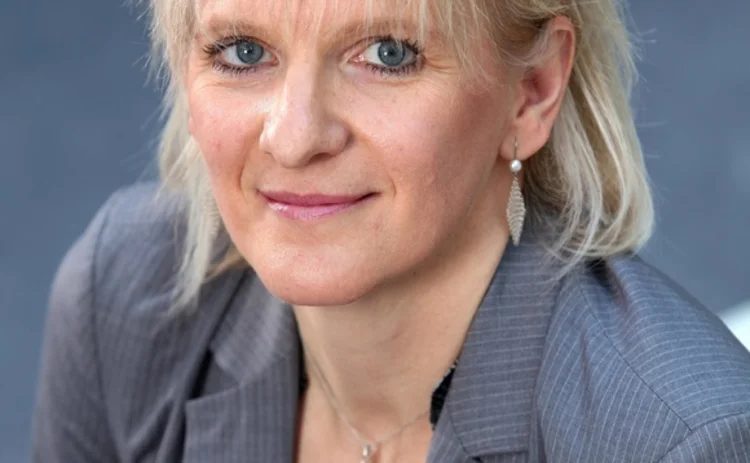

nathalie-masset
Nathalie Masset, deputy director of European debt markets, NYSE Euronext

In the face of persistently challenging conditions across global equity markets, high-frequency trading (HFT) firms are widening their activities to other asset classes in the pursuit of alpha. “More people are now actually trading multiple instruments, probably because HFT and other algorithmic techniques have competed away a lot of the obvious sources of alpha in single asset classes like equities,” says Bob Giffords, an independent banking and technology analyst based in the UK. “Firms now have to dig deeper to find alpha.”

Giffords points out that the high-speed arbitrage strategies typically employed by HFT firms—in which traders seek to make small profits on high volumes of trades by exploiting price discrepancies for securities across different equity trading venues—have dwindling opportunities to make profits in current market conditions.

Research carried out by New York-based consultancy Tabb Group shows monthly US equity share volumes declined from around 12 billion in May 2010 to about 8 billion in May 2011. In addition to declining volumes and a dearth of volatility in the equity markets over the past year, competition across trading venues has increased, making it a more challenging environment for firms purely reliant on high-speed trading techniques to generate profits.

Tabb Group has identified a convergence of market share in US trading venues over the past three years, which shows that liquidity is increasingly moving between venues during the day in response to changing market conditions.

Market-Makers
Cross-asset class HFT—spearheaded by the major Chicago-based market-makers and hedge funds, including Allston Trading, Getco and Citadel—is deployed across different trading desks by sophisticated HFT shops.

“Investment banks and brokers are very siloed,” says Nick Nielsen, head of quantitative trading at London-based hedge fund Marshall Wace. “Hedge funds can run every single asset class from any division of the group. They can arbitrage the banks because the banks are not always seeing all the information and cannot always act on it even if they have it.”

Nielsen says the proliferation of market data sources is providing HFT firms with the capacity to guide strategies across more asset classes. “You have market data, you know where to trade and it feeds in and works,” he says.

Des Peck, head of marketing and product at low-latency extranet connectivity provider Atrium Network in London, has also seen algorithms adapted for other asset classes. “You are now seeing some of the same strategies for cash equities vs. futures being adapted for foreign exchange (FX) pairs,” he says.

Atrium Network has reported significant growth over the past year in demand for multi-asset-class connectivity among proprietary trading desks of major sell-side firms and hedge funds with operations at Equinix’s NY4 datacenter in Secaucus, New Jersey.

A year ago, the low-latency connectivity provider was mainly linking its clients to the New York Stock Exchange and Nasdaq. But it is now increasingly fielding requests for packages in which the same trading desk of a firm will seek direct access to equities, FX and commodities markets.

“A firm trading Exxon may also be looking at the commodity price of oil traded on the New York Mercantile Exchange (Nymex), while offsetting the dollar price by tapping into the services of an FX provider, located at Secaucus,” says Peck. “So a firm may be trading commodities, equities and FX futures, running multiple pieces of connectivity, which demonstrates the increasing level of complexity we are starting to see.”

Electronification
The increased electronification of fixed-income markets is also enabling HFT firms to link strategies to credit products. London-based multilateral trading facility (MTF) Vega-Chi, which launched its European convertible bond platform in February, has brought electronic trading to the over-the-counter (OTC) fixed-income markets, where participants have traditionally agreed trades over the telephone. Meanwhile, Paris-based fixed-income trading system NYSE BondMatch launched last month.

Peck of Atrium Network says the development of electronic platforms for fixed-income products enable HFT firms to examine fixed-income data on a granular basis through pre-trade analysis in a similar way to what has been done in equity markets, thereby facilitating cross-asset class trading. Fixed-income instruments traded at NYSE BondMatch will provide HFT firms with additional sources of data—and instruments—that can be used in conjunction with different trades.

Nathalie Masset, deputy director of European debt markets at NYSE Euronext in Paris, says “a couple” of HFT firms had expressed an interest in trading on BondMatch, prior to its launch in July. “Today, almost everything is traded on the over-the-counter market and there is not a lot of data available on this type of corporate bond trading. We are implementing an innovative model with pre-trade and post-trade transparency and post-trade data,” says Masset.

BondMatch, which uses NYSE Euronext’s Universal Trading Platform (UTP) architecture, is expected to take up to two years to reach its liquidity target, according to Masset. She says that once BondMatch reaches a sufficient level of liquidity, it could be used as one leg of a cross-asset-class trade, enabling a high-speed trader to complete multi-leg, price-point discovery before executing.

Centralizing Liquidity
Hirander Misra, co-founder and, until his resignation in July, CEO of Algo Technologies, a low-latency connectivity provider based in London and New York, says electronic, order-driven markets—where bid and offer prices are displayed transparently on a trading platform—serve to centralize liquidity, providing algorithms with new opportunities to make higher returns.

Misra says that platforms such as Vega-Chi can be used by HFT firms to perform a delta hedge on a convertible bond issues. “Say telecommunications provider Vodafone is issuing debentures and it is raising capital—about 25 percent of the value for liquid stocks in a convertible bond issue can be traded in the underlying equity,” Misra says. “You can get convertible arbitrage where people buy the bond, then delta hedge that position by short selling the underlying cash equity as well. So this is where you get linked strategies, even in bonds. Trading in equities is linked to bonds by virtue of that hedge.”

Technology Challenges
However, HFT firms that seek to exploit opportunities across different asset classes face appreciable technical and logistical challenges. For example, while a NYSE Euronext options contract is cleared via its clearing derivatives subsidiary LiffeClear, the underlying equity on the London Stock Exchange will be cleared by LCH.Clearnet or Switzerland’s SIX x-clear.

HFT firms trading between different asset classes—such as equities and equity-index derivatives—also have to navigate timing delays between different markets. For example, the Nikkei 225 futures contract is traded on Chicago Mercantile Exchange (CME), while the underlying equities are traded on the Tokyo Stock Exchange (TSE).

In addition to these logistical challenges, Giffords says, navigating the threat of increasingly sophisticated gaming activities employed by traders watching strategies operating across different venues is complicated. “Traders are now interacting with different types of participants who are algorithmically watching their every move to anticipate what will happen next and grab a small slice of alpha—it’s much more competitive,” says Giffords.

Risk on the Rise
The migration of HFT into other asset classes has also given rise to fears that it is heightening levels of systemic risk in the financial system. Misra says the complexity imbedded in cross-asset class, high-frequency trading has raised concerns among financial regulators, who fear the linking of trades in different asset classes may have unintended consequences in the event of a market shock.

“The regulators are fearful about what happens with credit default swaps (CDSs), and other packaged products like that,” says Misra. “They are fearful that some of these strategies are so complex that they are difficult to understand and therefore difficult to track and audit, and if that is the case, in the event that things really go wrong, how do you know what the impact is and how do you mitigate it?”

Artur Fischer, joint CEO at Börse Berlin, says the linking of different asset classes, such as the $4-trillion-a-day global currency markets, through automated trading systems raises the risk of a “wildfire” of contagion. HFT accounted for about 30 percent of total FX flows in 2010, compared with about 13 percent in 2004, according to Boston-based financial technology consulting firm Aite Group.

“Think about the Flash Crash,” says Fischer. “It was limited to the futures market and the underlying. Let us assume somebody makes a connection to FX—suddenly you might have a major impact in the currency market if the volume traded is big enough and the market is on the brink of instability. That could have an effect on all kinds of things. When you connect different asset classes it can have an unwanted domino effect if circumstances are right, and, given the volumes in the FX market, it will therefore be unlikely that such a contagion takes place.”

To mitigate the risk of such a Flash Crash-type event occurring in the currency markets, Icap-owned post-trade services provider Traiana has led an industry-wide project in the FX industry with major prime brokers and trading platforms to implement greater risk management controls.

Nick Solinger, chief marketing officer at Traiana in New York, says the highly publicized Flash Crash in May 210 was a significant wake-up call, resulting in the launch of the risk management service, designed to prevent a similar incident from breaking out in the FX markets. The service enables banks to centrally monitor and manage currency trading activity and limits globally across trading platforms in real time. If inappropriate trading activity takes place, an alarm will be triggered, enabling a prime broker to halt trading.

Interconnectedness
In recognition of the increasing interconnectedness of HFT between different asset classes, Traiana’s risk management service also monitors exchange-traded futures trades and may also be expanded to other asset classes. “The service is designed to prevent a prime broker’s buy-side clients taking on unexpected exposure due to technical problems with an algorithm or a faulty model,” says Solinger.

However, Misra says that without a concerted effort among financial regulators to monitor the risks associated with HFT across different asset classes, a systemic financial risk remains possible.

The Securities and Exchange Commission (SEC) announced proposals for a consolidated audit trail that would run across different markets and asset classes, allowing regulators to “track trade data across multiple markets, products and participants in real time,” said Mary Schapiro, chairman of the SEC, in an official statement she made in May last year.

While such a consolidated audit trail could theoretically allow financial regulators to quickly analyze suspicious trading activity across different markets and asset classes, such a system currently appears a long way off. In the mean time, the proliferation of HFT across different asset classes shows no signs of abating. While the ingenuity of HFT firms to develop more complex webs of transactions will drive their capacity to make higher returns, financial regulators will need to ensure that the journey to alpha does not take the financial markets on another perilous course.

Only users who have a paid subscription or are part of a corporate subscription are able to print or copy content.

To access these options, along with all other subscription benefits, please contact info@waterstechnology.com or view our subscription options here: https://subscriptions.waterstechnology.com/subscribe

You are currently unable to copy this content. Please contact info@waterstechnology.com to find out more.

Most read articles loading...

You need to sign in to use this feature. If you don’t have a WatersTechnology account, please register for a trial.

Sign in
You are currently on corporate access.

To use this feature you will need an individual account. If you have one already please sign in.

Sign in.

Alternatively you can request an individual account here