Citadel's Sentinel: CIO Tom Miglis Aims to Do the Impossible
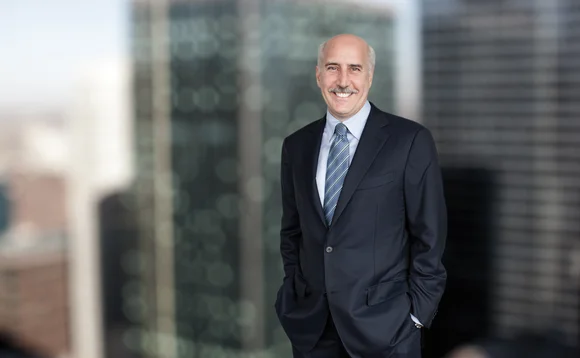

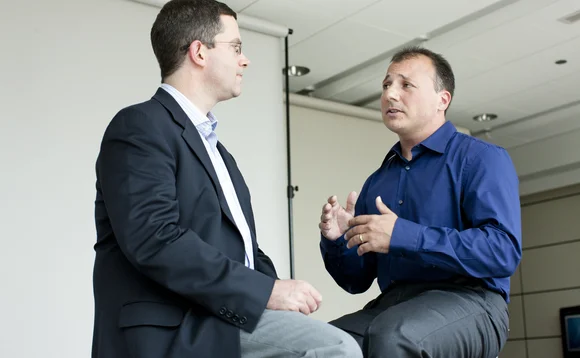




Tom Miglis doesn’t think he is extraordinary—in fact, he insists he isn’t. Miglis’ hobbies are exactly two: work and family. In a time when C-levels in finance are known for their eccentricities, Miglis’ lack of pretense is endearing. At a recent meeting in a Manhattan breakfast spot owned by celebrity chef Gordon Ramsay and reportedly visited by the Beckhams the day prior, the CIO at Citadel ordered something slightly unexpected.
“Do you have any Cheerios?” he asked the server.
That moment looks like many others Miglis spends by the floor-to-ceiling whiteboards that blanket Citadel’s head office in Chicago. His expectations as CIO can sometimes be stunningly simple—foundational even—yet often they aren’t on a traditional buy side’s menu of options. That is the point.
Running technology at Ken Griffin’s $13 billion hedge fund since 2001, Miglis works without fear of failure, engendering a mix of collaboration, engineering wherewithal, and grit at the nimble firm. With a series of successes during that time, Citadel has not only weathered a period when other funds have faltered, but has dramatically altered the possibilities of what technology can do.
Powerful Personalities
Miglis counts his luck, breaking into finance in the early 1980s with Salomon Brothers, a shop known for its forward approach to capital markets technology and one that, after restructuring with the Citi merger, has produced a number of buy-side head technologists.
"At Citadel, we use technology to change the nature of our people’s jobs. For example, we recognize that our portfolio managers’ and traders’ most important role isn’t the actual execution; it’s gathering information, discovering opportunities others aren’t seeing. You use technology to flip the equation around, and for Ken, that is key.” —Tom Miglis, Citadel
A colleague at Salomon and longtime friend, Tom Sanzone, who is now a senior vice president with Booz Allen Hamilton, says Miglis’ steady hand sets him apart. “Tom knows how to deal with conflicts and build the relationships necessary to deliver those high-risk, high-reward challenges he takes on,” Sanzone says. “They are often multi-dimensional, with both building the platform and managing the powerful personalities involved.”
In an industry that is known for them, Griffin is among hedge funds’ more powerful personalities. Famously founded in a Harvard dormitory room in 1991, Griffin’s Citadel offers seven single and multi-strategy funds that, taken together, produce returns at an annualized performance of 20 percent. With a staff of 1,100, Citadel is large for a hedge fund. But when Griffin brought Miglis on, he had greater ambitions, and a set of much larger competitors, in mind.
“In the early days, Ken would ask how we would use technology at Salomon, because of its reputation as the leader in applying advanced technology to trading,” Miglis says. “At Citadel, we use technology to change the nature of our people’s jobs. For example, we recognize that our portfolio managers’ and traders’ most important role isn’t the actual execution; it’s gathering information, and discovering opportunities others aren’t seeing. You use technology to flip the equation around, and for Ken, that is key.”
Only users who have a paid subscription or are part of a corporate subscription are able to print or copy content.
To access these options, along with all other subscription benefits, please contact info@waterstechnology.com or view our subscription options here: https://subscriptions.waterstechnology.com/subscribe
You are currently unable to print this content. Please contact info@waterstechnology.com to find out more.
You are currently unable to copy this content. Please contact info@waterstechnology.com to find out more.
Copyright Infopro Digital Limited. All rights reserved.
As outlined in our terms and conditions, https://www.infopro-digital.com/terms-and-conditions/subscriptions/ (point 2.4), printing is limited to a single copy.
If you would like to purchase additional rights please email info@waterstechnology.com
Copyright Infopro Digital Limited. All rights reserved.
You may share this content using our article tools. As outlined in our terms and conditions, https://www.infopro-digital.com/terms-and-conditions/subscriptions/ (clause 2.4), an Authorised User may only make one copy of the materials for their own personal use. You must also comply with the restrictions in clause 2.5.
If you would like to purchase additional rights please email info@waterstechnology.com
More on Emerging Technologies
Firms get AI access to LSEG data via DataBP admin layer
LSEG has expanded its agreement with DataBP to enable customers’ AI-based tools to request and evaluate data from the exchange and maintain more comprehensive usage records.

Cusip, MSCI make private markets identifiers; major banks back Osera; and more
The Waters Cooler: A recap of the major tech and data news from the past week in the capital markets.

Waters Wavelength Ep. 359: GPU compute market and Sibos
This week, Shen and Nyela talk about the GPU compute market and recent technology conferences.
Rimes builds agents for exception management
The vendor aims to improve its data foundations to allow for greater agent autonomy.

How long will AI tokenomics matter?
The Waters Wrap: Banks and asset managers are rethinking the economics of AI. Wei-Shen examines how firms will manage token costs.

TT acquires Trafix in 24/7 push, T+1 deadlines in the EU loom, and more
The Waters Cooler: A recap of the major tech and data news from the past week in the capital markets.

Buy-side firms warn semantic layers not a quick fix for AI integration
Semantic layers promise to teach AI what a firm’s data means. Keeping that meaning current is the part that may get overlooked, tech heads warn.

If everyone can be an expert in everything, is anyone an expert in anything?
The Waters Wrap: AI has promised to democratize knowledge and skillsets. Reb wonders whether that’s an entirely good thing.