Quantifying Catastrophe After Sandy
A few months ago, I wrote an article in sibling publication Waters about measuring natural catastrophes, which looked at modeling services for insurance-linked securities—catastrophe bonds, for example. Business continuity was rather far from its focus.
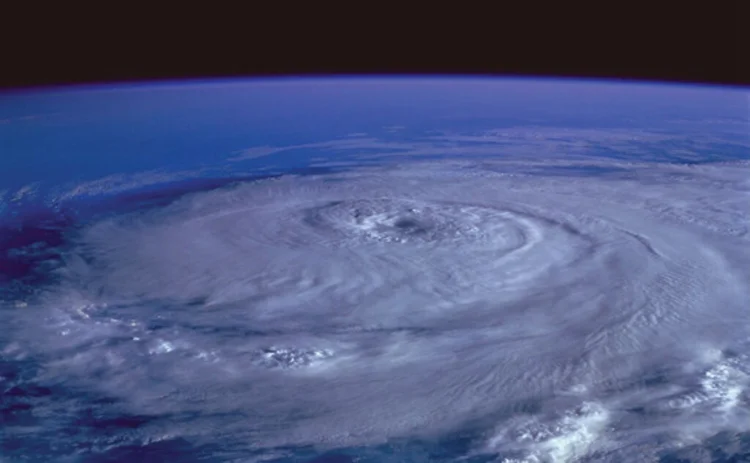
Yet as financial firms assess what happened in the lead-up to Sandy, and how well they have managed in the days after, elucidating catastrophe risk at a macro level, to inform firms' continuity plans, seems more key than ever. One risk advisory specialist, Eqecat, measures Sandy as a “one-in-10-year” event in terms of total losses, according to stochastic models shared on a conference call yesterday. Hurricane Katrina’s devastation, by comparison, was a one-in-25.
Each is signficant. While disaster recovery has become a regular priority for COO or CTOs, broader business continuity considerations suffer something of an image problem when the cost-benefit, particularly for smaller firms, isn't clear. For context, financial communications provider IPC commissioned a survey on business continuity ahead of the London Olympics this summer—a far more predictable event than Sandy that nevertheless implied at least mild risk to infrastructure. Interesting opinion emerged: Firms see little upside in girding for low-probability, high-risk events, even as clients are increasingly more likely to ask about it.
The choice still seems to be easy: Hunker down and improvise the use of mobile technology and remote access as much as possible. Assuming a widespread impact, everyone will be in the same boat, and beyond an act of fate, how bad could it be?
Bad.
One point worth considering is concentration of physical assets, and the extent to which is it possible to reroute trading activities. If less densely in the past, contemporary capital markets infrastructure—e.g., cloud providers and datacenters—remains regionally clustered, not just in New York but also throughout the many environmentally vulnerable hubs around the world, particularly in Asia. There is a reason why catastrophe modelers and insurers keep incredibly granular information about these cores: Not only are they exposed; they also continue to represent, by far, the greatest concentration of liability.
That means backup power and cooling systems are one priority, while reliable rerouting is another. The US Securities and Exchange Commission (SEC) has pushed for better redundancies at the exchanges, but the New York Stock Exchange’s aborted move to NYSE Arca on Tuesday, reportedly because of process and coding issues, shows that push has been too slow. And theirs is only the most public example.
A second question came up as I was meeting with a couple of investment managers on Tuesday, all of whom had arrived from the UK and Ireland for a conference, only to be waylaid by the hurricane.
I was asked, respectfully but rightly, why the US hasn’t buried more of its coastal power lines underground; how hospital generators can fail; and how Amtrak trains managed to design rolling stock a few years ago with Alstom, builder of France's high-speed TGV trains, for Amtrak’s Acela service, but can’t run those trains at peak speed because of very subtle, though expensive, changes required in the grade at certain crossings and curves.
One of the managers asked why the US struggles to get anything “public” quite right—at least until first responders show up to remind us what humanity is made of.
That answer probably requires a book, but for business continuity's sake, the smaller point is easy to grasp. Effective planning must rely on the peculiarities of the jurisdiction in question, beyond geology, meteorology, or the value of assets in a particular location. Age of transportation and telecommunications infrastructure, prioritization of public goods, how a particular community culturally reacts to crisis, and—as I learned from funds that specialize in cat bonds—litigiousness and indemnity laws, all become relevant. Amidst the adrenaline of disasters these characteristics seem self-evident, but in planning for them, having an anthropologist or an actuary on the team may be nearly as valuable as an engineer.
Considering those challenges, some firms may rather set down with a light footprint in their satellite offices and keep critical infrastructure nearer to home. That, of course, gets back to the first issue, only with the added virtue, or temptation, of familiarity.
Though the numbers will evolve and probably rise, Eqecat currently estimates total insured losses from Sandy will reach $20 billion on the high side, far less than Katrina. While Sandy may renew calls for a national catastrophe fund on the heels of Hurricane Irene a year earlier, Eqecat says the event “doesn’t prove a secular trend” for extreme weather forming in the Atlantic basin. Yet.
Still, many are sure to wonder. And perhaps that is for the better.
Only users who have a paid subscription or are part of a corporate subscription are able to print or copy content.
To access these options, along with all other subscription benefits, please contact info@waterstechnology.com or view our subscription options here: https://subscriptions.waterstechnology.com/subscribe
You are currently unable to print this content. Please contact info@waterstechnology.com to find out more.
You are currently unable to copy this content. Please contact info@waterstechnology.com to find out more.
Copyright Infopro Digital Limited. All rights reserved.
As outlined in our terms and conditions, https://www.infopro-digital.com/terms-and-conditions/subscriptions/ (point 2.4), printing is limited to a single copy.
If you would like to purchase additional rights please email info@waterstechnology.com
Copyright Infopro Digital Limited. All rights reserved.
You may share this content using our article tools. As outlined in our terms and conditions, https://www.infopro-digital.com/terms-and-conditions/subscriptions/ (clause 2.4), an Authorised User may only make one copy of the materials for their own personal use. You must also comply with the restrictions in clause 2.5.
If you would like to purchase additional rights please email info@waterstechnology.com
More on Trading Tech
CME marks cloud migration milestones, new FIX guidance for brokers, and more
The Waters Cooler: A recap of the major tech and data news from the past week in the capital markets.

How Quoniam boosted its sentiment strategy by adding an LLM
The asset manager’s upgraded system creates scores from more-informative forward-looking parts of news.

WatersTechnology latest edition
Check out our latest edition, plus more than 14 years of our best content.

Tech and data fragmentation irks enterprise risk managers
Often at the mercy of decisions made by other parts of the bank, ERM heads gripe at disparate systems, poor UX, and reporting gaps.

When trading systems disagree: a deterministic architecture for event sequencing
Modern trading platforms execute millions of events at extraordinary speed, but speed alone does not ensure that every downstream system shares the same view of reality, says Gaurav Tiwari.

Goldman exec: Dec. 6 a ‘lighthouse’ for EU T+1 readiness
Officials from JP Morgan, the European Central Bank, the National Securities Depository, and Goldman Sachs explained how T+1 preparation needs to be different in the EU than in the US, while speaking at Sibos.

Month-long power glitch hits key APAC trade surveillance tool
Nasdaq’s alert functions were restored, but users say testing and calibration tools were still disrupted.
Bankers question value of round-the-clock trading
BNY and State Street execs predict the arrival of extended-hours trading will come with a hefty price tag for industry firms.