Compliance Officers, I Feel Your Transcription Pain
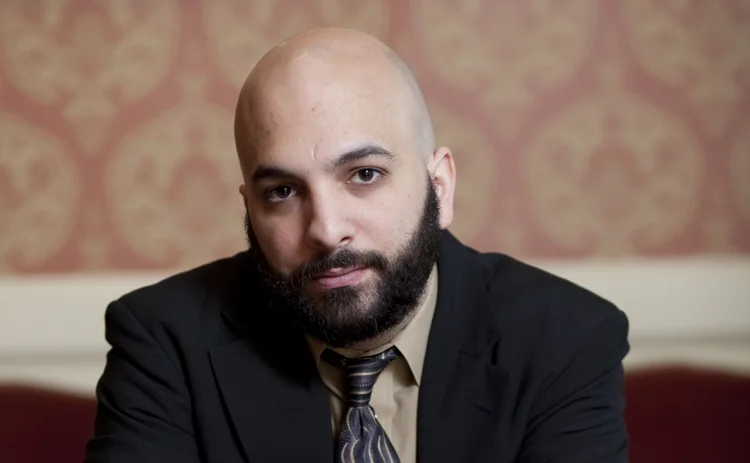

For Christmas, my parents got me a pretty amazing gift—Dragon NaturallySpeaking.
Dragon is a speech recognition tool. Where Apple’s Siri understands and responds to speech, Dragon listens to and then transcribes it.
I love being a journalist and hope to spend my career in this profession, but the one thing I absolutely abhor is transcribing interviews. Some people have the gift of being able to listen and type accurately, all in real time. I'm not like that. I record every interview I conduct because I can't listen, formulate questions, understand what's being said, and type all at the same time.
At best, it takes me about 90 minutes to transcribe a 30 minute interview. It is a nightmare. And if there's an accent involved, it can take twice as long. I'm so bad at transcription that I have been known to pay others to do it for me.
So with Dragon, I had hoped to become a more productive journalist by cutting down on the time it takes to transcribe interviews. Sadly, that did not happen.
While Dragon does a good job of interpreting my words correctly, it is abysmal at understanding the interviewee's voice. It's not completely useless, though: I can dictate the interview into the device, which might save me a few minutes in the long run.
So, transcription is sadly still a headache, albeit a necessary one that I accept as part of being a reporter.
Voice Recording for Compliance
Compliance officers reading this might be nodding their heads in sympathy. In the upcoming February issue of Waters, my colleague Jake Thomases looks at Commodity Futures Trading Commission (CFTC) Rule 1.35(a), which mandates that firms trading commodity interests keep records of all communications pertaining to those transactions for up to one year. This includes email, instant messages and—crucially—audio.
The feature, titled "Wired for Sound,” will be available online next week. It's an expansive look at new enhancements in the expensive and challenging art of capturing, storing and analyzing voice recordings. One section, though, jumped out for me:
The best way to do any analysis of audio is to transcribe it to text first. But as any reporter can tell you, the transcription software on the market today is less than perfect. Banks are familiar with it, having employed it in their call centers for years, whereupon they would flag certain stock names that came up in conversation. But call center operators are trained to speak slowly, articulate well, and wait until the other person is finished speaking before they start. That makes it easy on the transcription software. Conversations on the trading desk aren't nearly as civilized. One way to approach the problem is to record in stereo, producing an A leg and a B leg for the two parties that can be transcribed separately. But even that falters when there are three or more parties on a call.
If you don't absolutely have to accurately transcribe conversations, then it's just not worth the time and—in the case of capital markets technology—the expense. In Jake's feature discusses some of the doubts industry participants have as to how closely the CFTC will audit this rule.
If there's not enough of a prod—i.e., if the penalties are not more severe than the headache and expense of installing the technology—then firms will likely continue to play the wait-and-see game when it comes to 1.35(a).
On a side note, though, if any of you vendors working in this space have a beta version of a transcription device you would like to test out on a journalist, please email me at anthony.malakian@incisivemedia.com or give me a call at 646-490-3973. I'll be your guinea pig.
Only users who have a paid subscription or are part of a corporate subscription are able to print or copy content.
To access these options, along with all other subscription benefits, please contact info@waterstechnology.com or view our subscription options here: https://subscriptions.waterstechnology.com/subscribe
You are currently unable to print this content. Please contact info@waterstechnology.com to find out more.
You are currently unable to copy this content. Please contact info@waterstechnology.com to find out more.
Copyright Infopro Digital Limited. All rights reserved.
As outlined in our terms and conditions, https://www.infopro-digital.com/terms-and-conditions/subscriptions/ (point 2.4), printing is limited to a single copy.
If you would like to purchase additional rights please email info@waterstechnology.com
Copyright Infopro Digital Limited. All rights reserved.
You may share this content using our article tools. As outlined in our terms and conditions, https://www.infopro-digital.com/terms-and-conditions/subscriptions/ (clause 2.4), an Authorised User may only make one copy of the materials for their own personal use. You must also comply with the restrictions in clause 2.5.
If you would like to purchase additional rights please email info@waterstechnology.com
More on Trading Tech
CME marks cloud migration milestones, new FIX guidance for brokers, and more
The Waters Cooler: A recap of the major tech and data news from the past week in the capital markets.

How Quoniam boosted its sentiment strategy by adding an LLM
The asset manager’s upgraded system creates scores from more-informative forward-looking parts of news.
WatersTechnology latest edition
Check out our latest edition, plus more than 14 years of our best content.
Tech and data fragmentation irks enterprise risk managers
Often at the mercy of decisions made by other parts of the bank, ERM heads gripe at disparate systems, poor UX, and reporting gaps.

When trading systems disagree: a deterministic architecture for event sequencing
Modern trading platforms execute millions of events at extraordinary speed, but speed alone does not ensure that every downstream system shares the same view of reality, says Gaurav Tiwari.

Goldman exec: Dec. 6 a ‘lighthouse’ for EU T+1 readiness
Officials from JP Morgan, the European Central Bank, the National Securities Depository, and Goldman Sachs explained how T+1 preparation needs to be different in the EU than in the US, while speaking at Sibos.

Month-long power glitch hits key APAC trade surveillance tool
Nasdaq’s alert functions were restored, but users say testing and calibration tools were still disrupted.
Bankers question value of round-the-clock trading
BNY and State Street execs predict the arrival of extended-hours trading will come with a hefty price tag for industry firms.