Schapiro Announces SEC Depature
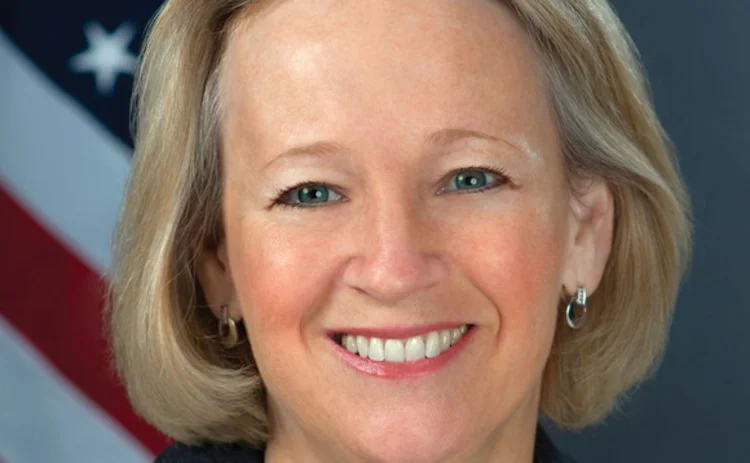
Schapiro has served as the SEC chief since her appointment by President Barack Obama on January 20 2009. A release from the regulator points to an overhauled enforcement regime during her tenure, with 735 actions in 2011 and 734 in the full year 2012 cycle.
During Schapiro's management, the SEC has also been undertaking a period of unprecedented rulemaking activity, brought about by the financial crisis and the establishment of the Dodd-Frank Act. Other initiatives include the SEC's whistleblower program, and the ongoing reform of the derivatives market.
Prior to her current period at the SEC, Schapiro also served as its head from 1988-1994, first appointed by President Ronald Reagan, reappointed by President George HW Bush in 1989 and named acting chairman by President Bill Clinton in 1993. She then served as chairman of the SEC's sister regulator, the Commodity Futures Trading Commission (CFTC) until 1996 when appointed by President Clinton, and remains the only person to hold the top titles at both agencies.
A replacement, under US law, will normally be nominated by President Obama and will have to be confirmed by the US Senate in due course. The White House has already nominated Commissioner Elisse B Walter, but according to the New York Times, as Walter is already a serving member of the SEC and has therefore received approval from the Senate, her appointment will not require an interim period or Congressional approval.
Only users who have a paid subscription or are part of a corporate subscription are able to print or copy content.
To access these options, along with all other subscription benefits, please contact info@waterstechnology.com or view our subscription options here: https://subscriptions.waterstechnology.com/subscribe
You are currently unable to print this content. Please contact info@waterstechnology.com to find out more.
You are currently unable to copy this content. Please contact info@waterstechnology.com to find out more.
Copyright Infopro Digital Limited. All rights reserved.
As outlined in our terms and conditions, https://www.infopro-digital.com/terms-and-conditions/subscriptions/ (point 2.4), printing is limited to a single copy.
If you would like to purchase additional rights please email info@waterstechnology.com
Copyright Infopro Digital Limited. All rights reserved.
You may share this content using our article tools. As outlined in our terms and conditions, https://www.infopro-digital.com/terms-and-conditions/subscriptions/ (clause 2.4), an Authorised User may only make one copy of the materials for their own personal use. You must also comply with the restrictions in clause 2.5.
If you would like to purchase additional rights please email info@waterstechnology.com
More on Regulation
Report once: will Esma’s €1bn reforms deliver the full picture?
Critics say plan to merge three reporting regimes will see scant returns, and won’t mesh with single-sided reporting.

Reasoning agents enter the onboarding process for banks
The next phase for banks in the KYC/AML space will be using agentic AI to replace sequential, siloed checks with orchestrator agents, IBM technologists say.

SEC gunning to take over CAT in 2027
Chairman Atkins has plans for the SEC to run the Consolidated Audit Trail directly. Industry participants are split on the idea.

Managing regulatory transformation through a Dual-Flow Operating Model
Darshan Shah presents an operating model that enables project teams to implement complex regulatory programs, preserve business continuity, reduce risk, and prepare enterprise platforms for regulatory change.

The complexity of using AI to tackle compliance
The Waters Wrap: Law firms are introducing new tools to help with regulatory compliance, potentially encroaching on regtech vendors’ territory, Wei-Shen writes.

SEC denies 24X’s requested SIP exemption, for now
Start-up exchange cannot begin its overnight market session before the equity data plans’ hours are scheduled to be extended on December 6. But that’s only half of it.

Cyber audit leaves Eiopa with a credibility problem
The Dora supervisor charged with overseeing critical tech vendors has been critiqued for IT security failings.

The danger of prediction markets is precisely how useful they are
The Waters Wrap: Prediction markets may seem like a gamer’s paradise or a honey pot for those looking to corrupt betting. But they have another use in forming institutional prices. At least, that’s what Max Bowie is putting his money on.